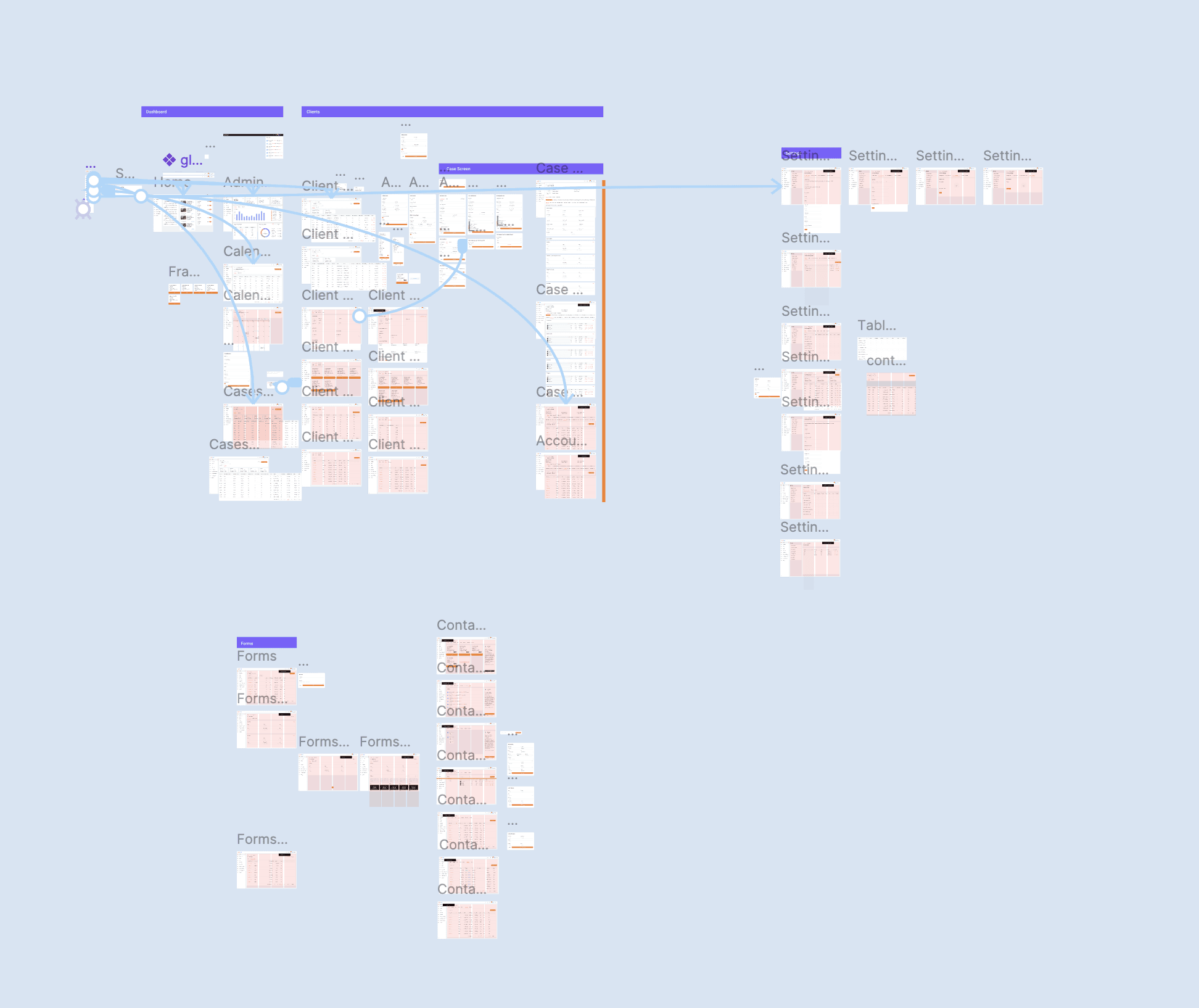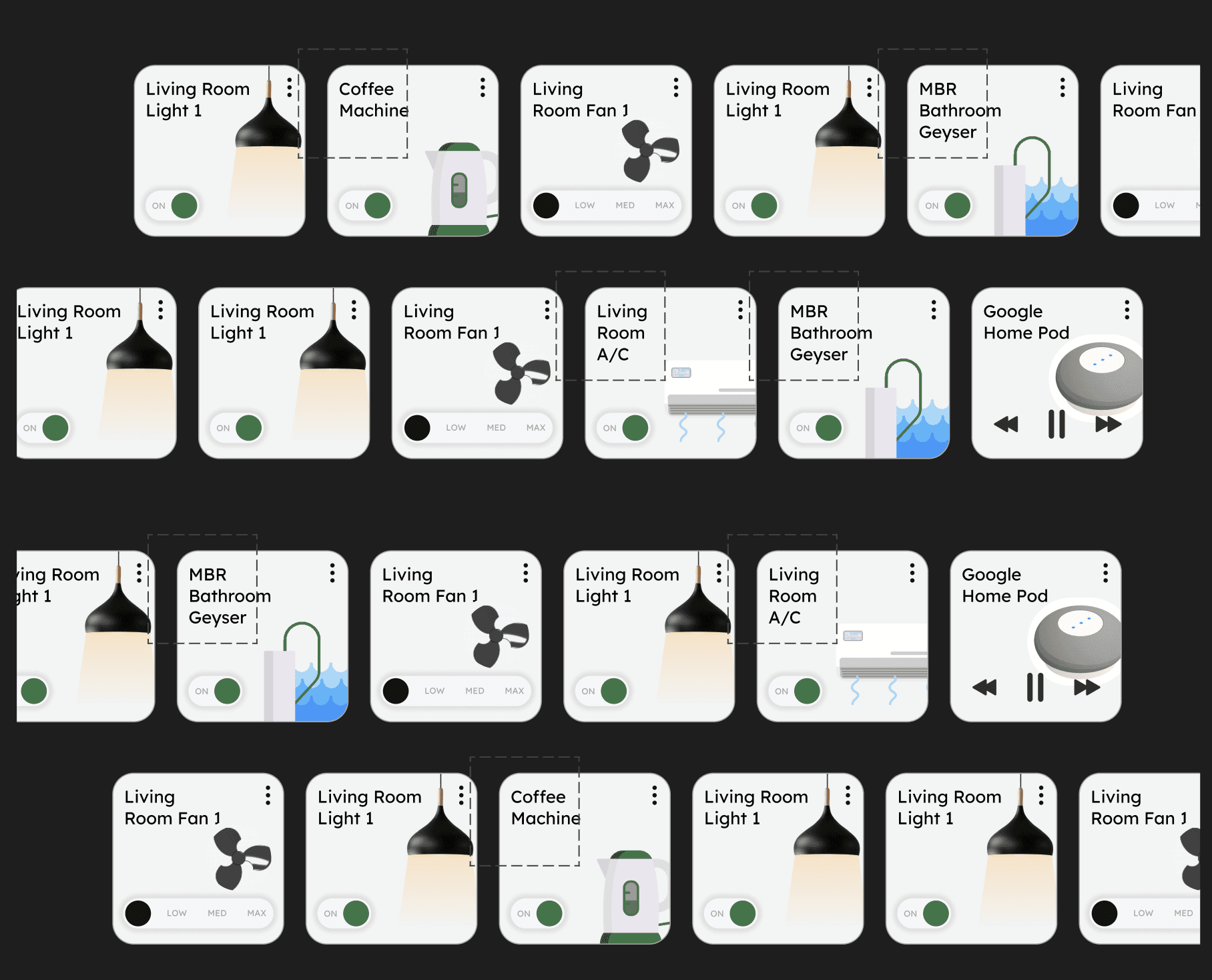


An end-to-end real estate commerce and operations platform spanning buyers, builders, vendors, and logistics.
Context
Bricko was envisioned as a unified digital platform for the real estate ecosystem — bringing together home buyers, builders, vendors, and internal operations under a single system.
The challenge was scale from day one. This wasn’t a single application or a linear user journey. It was a multi-sided marketplace combined with a deeply operational ERP, designed to support complex transactions, long sales cycles, and high coordination across stakeholders.
The Problem
The real problem wasn’t building multiple applications.
It was preventing fragmentation.
Without a systems-first approach, the platform risked becoming a collection of disconnected tools — each solving a local problem but creating global inefficiency.
Key challenges included:
Multiple user roles with conflicting priorities
High-value transactions requiring trust and transparency
Vendor-led commerce with operational dependencies
Builders needing control without micromanagement
Logistics and fulfilment tightly coupled with sales
The system needed to scale without increasing operational overhead.
The System We Designed
Instead of treating Bricko as a set of apps, we designed it as a single operational system with multiple interfaces.
Core system principles:
Centralised business logic with distributed experiences
Role-based access and permissions
Commerce deeply integrated with operations
Data consistency across all stakeholders
What the system included:
Home buyer platform for discovery, comparison, and purchase
Builder console for inventory, pricing, and sales management
Vendor marketplace with store management, order handling, and fulfilment
Internal ERP for operations, reporting, and coordination
Driver application to support last-mile logistics and fulfilment
Every interface was designed to plug into the same underlying system — not operate independently.
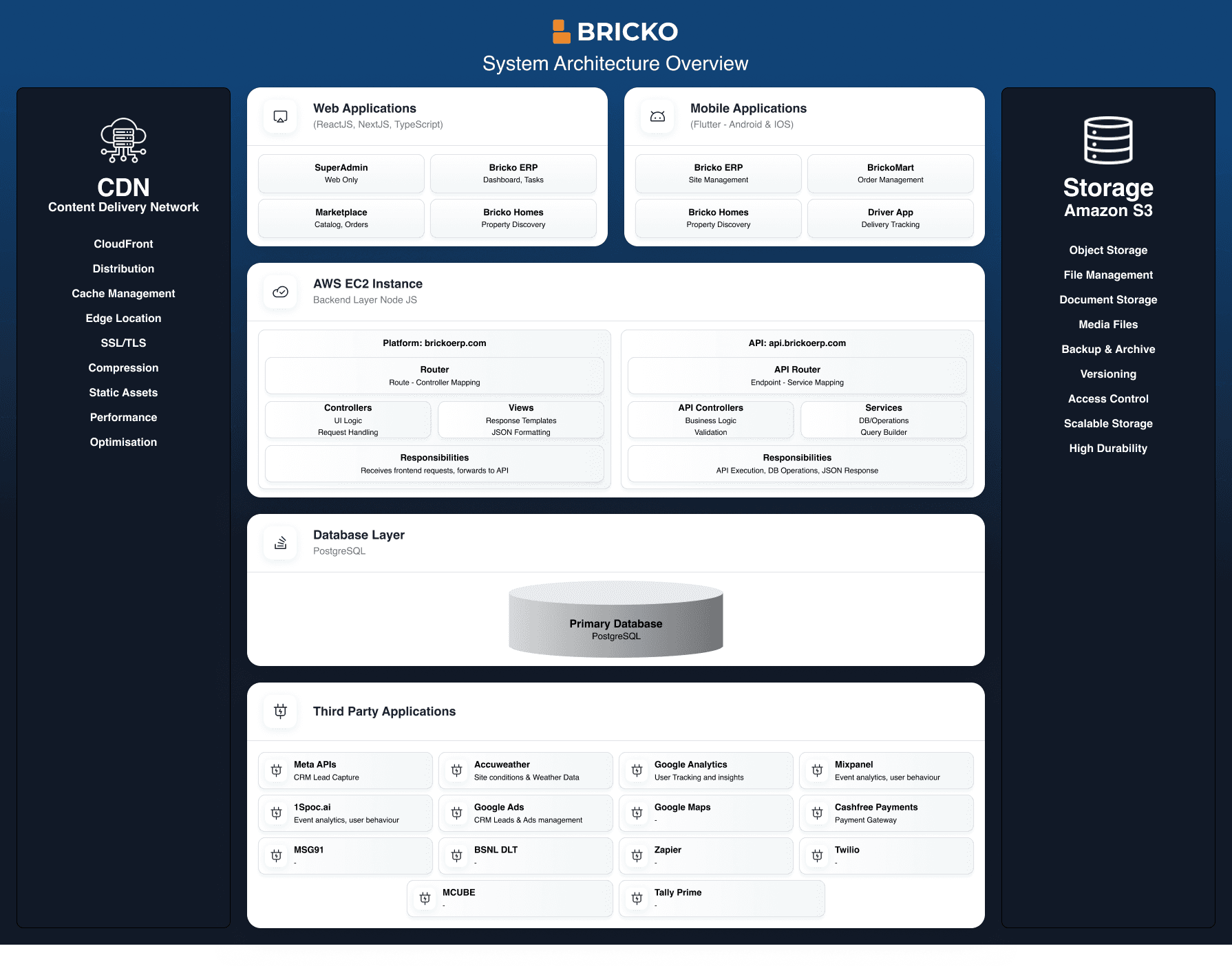
Centralised system architecture designed to support multiple applications while maintaining a single source of truth across commerce, operations, and logistics.
System Snapshots
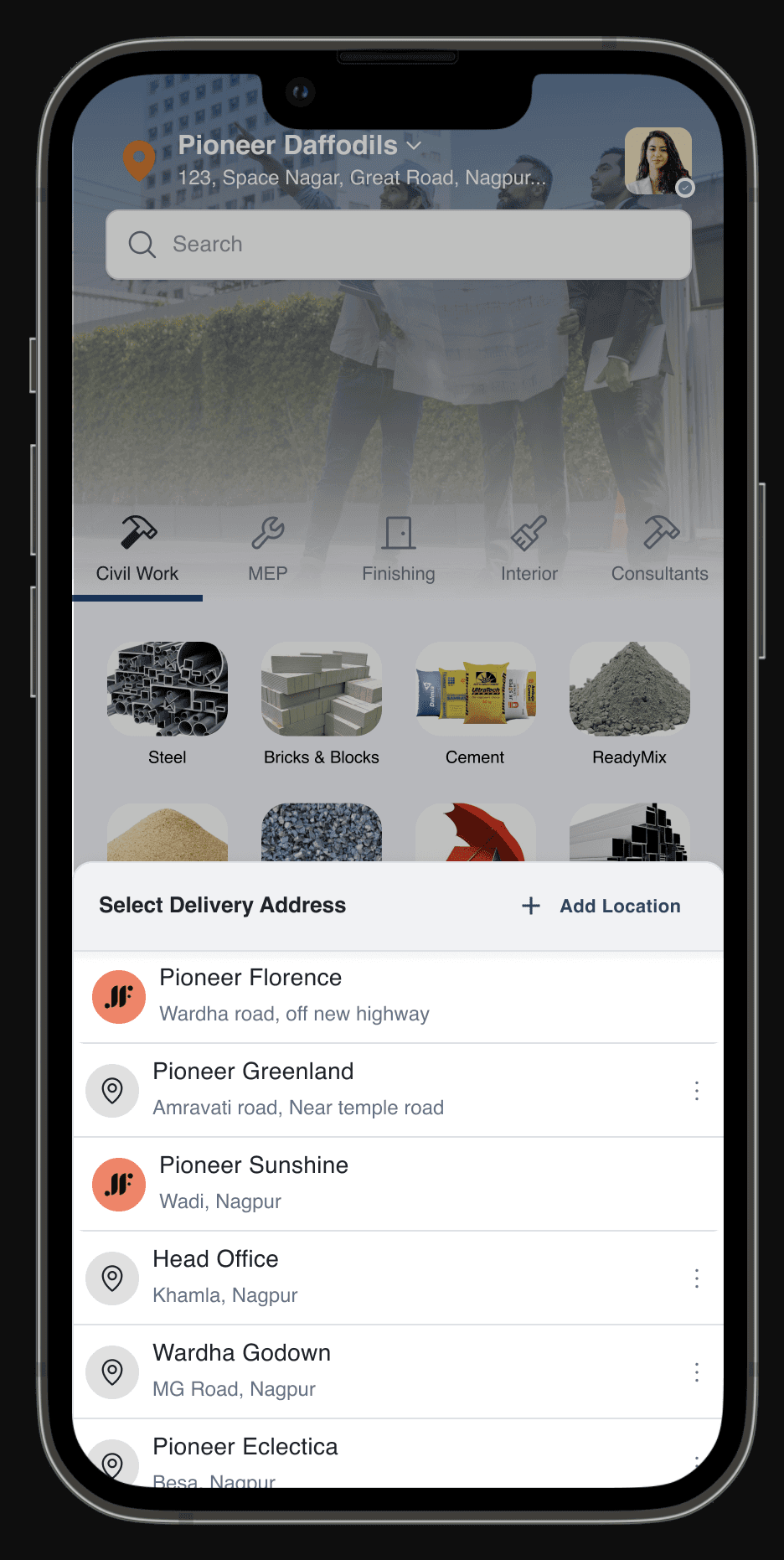
Buyer experience structured around availability, delivery context, and fulfilment readiness rather than simple product listings.
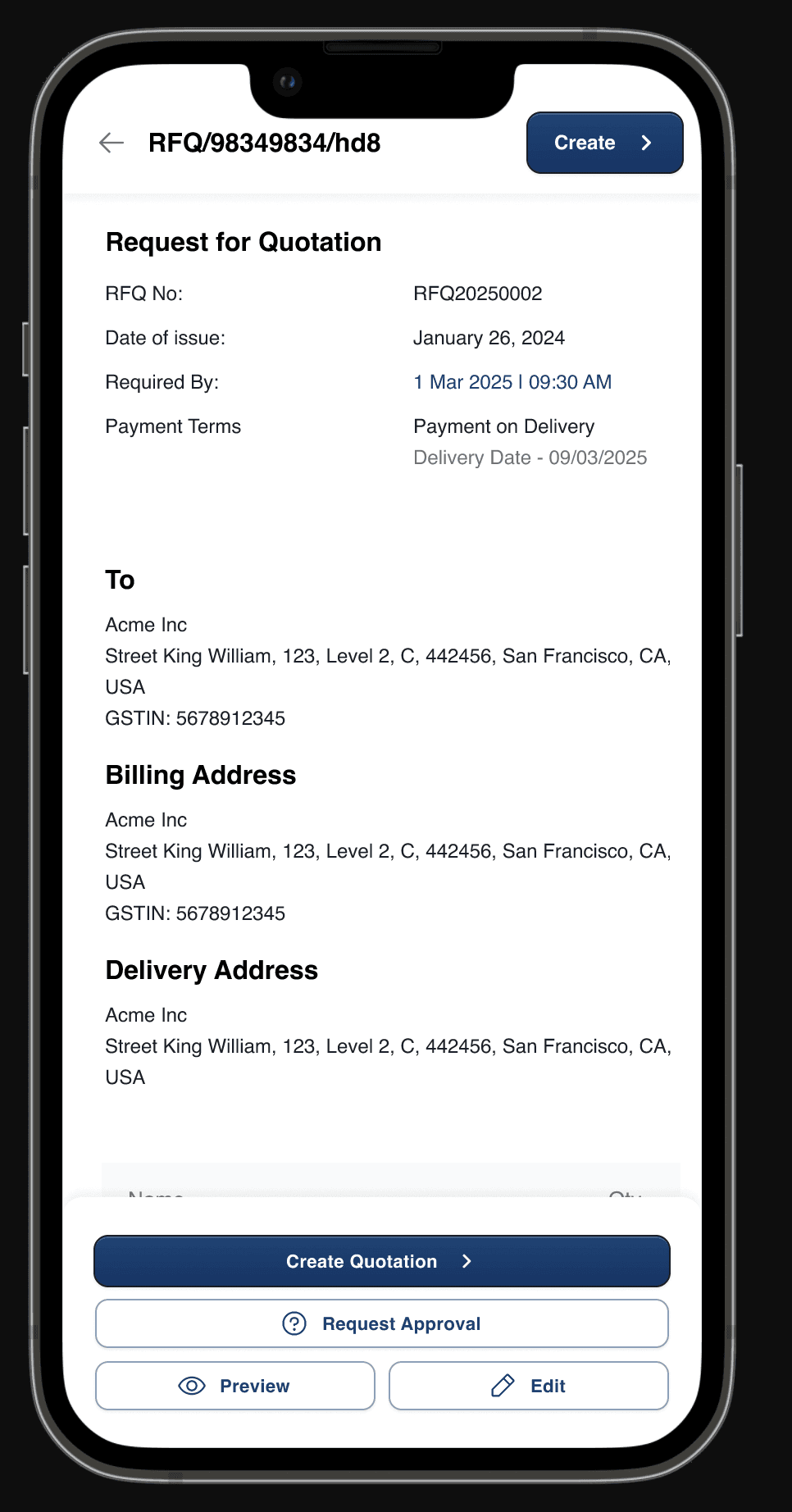
Quotation workflow designed to handle high-value, multi-parameter requests with clear ownership and traceability.
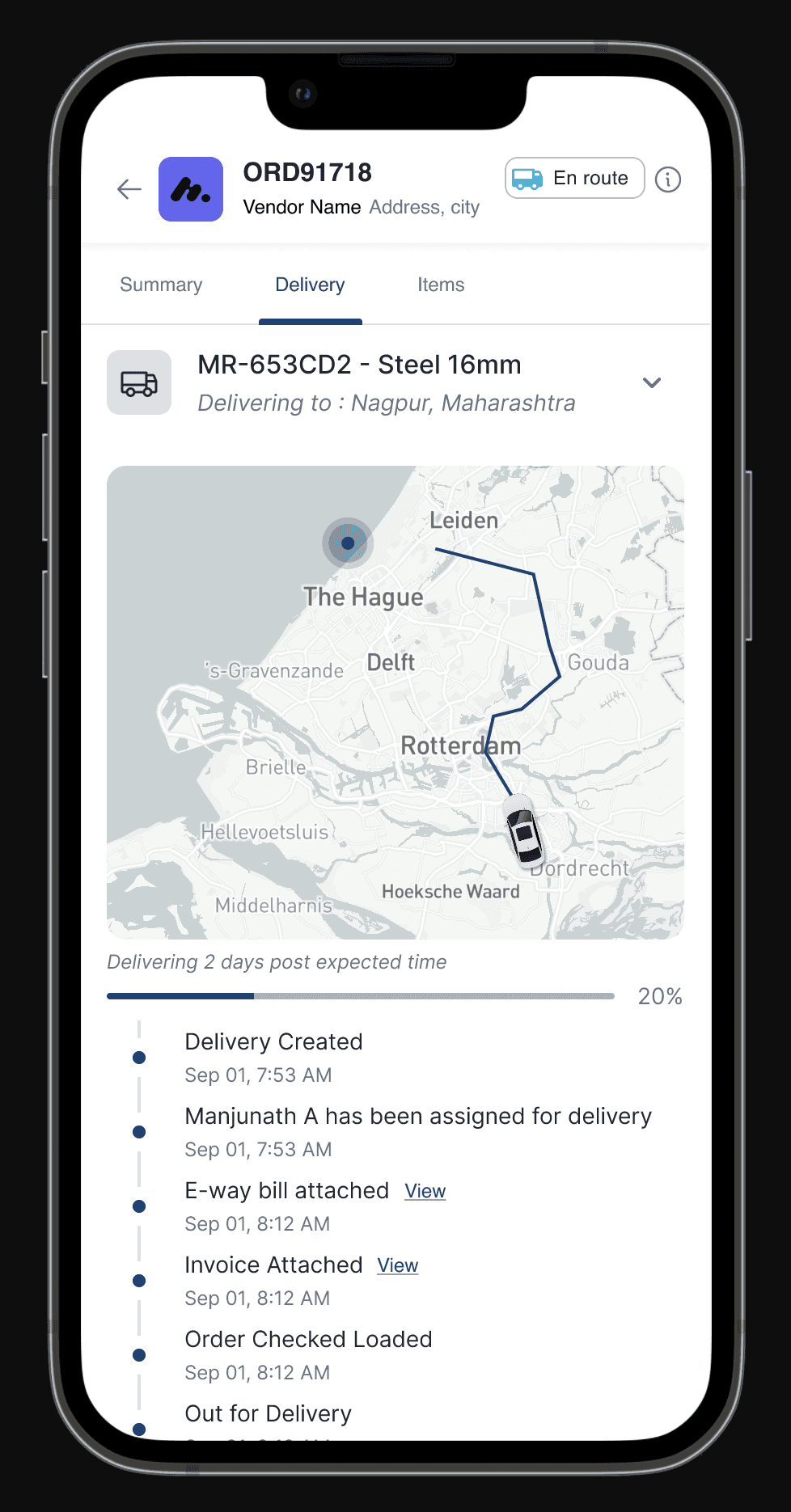
Real-time delivery tracking integrated directly into the commerce flow to reduce coordination gaps between sales and fulfilment.
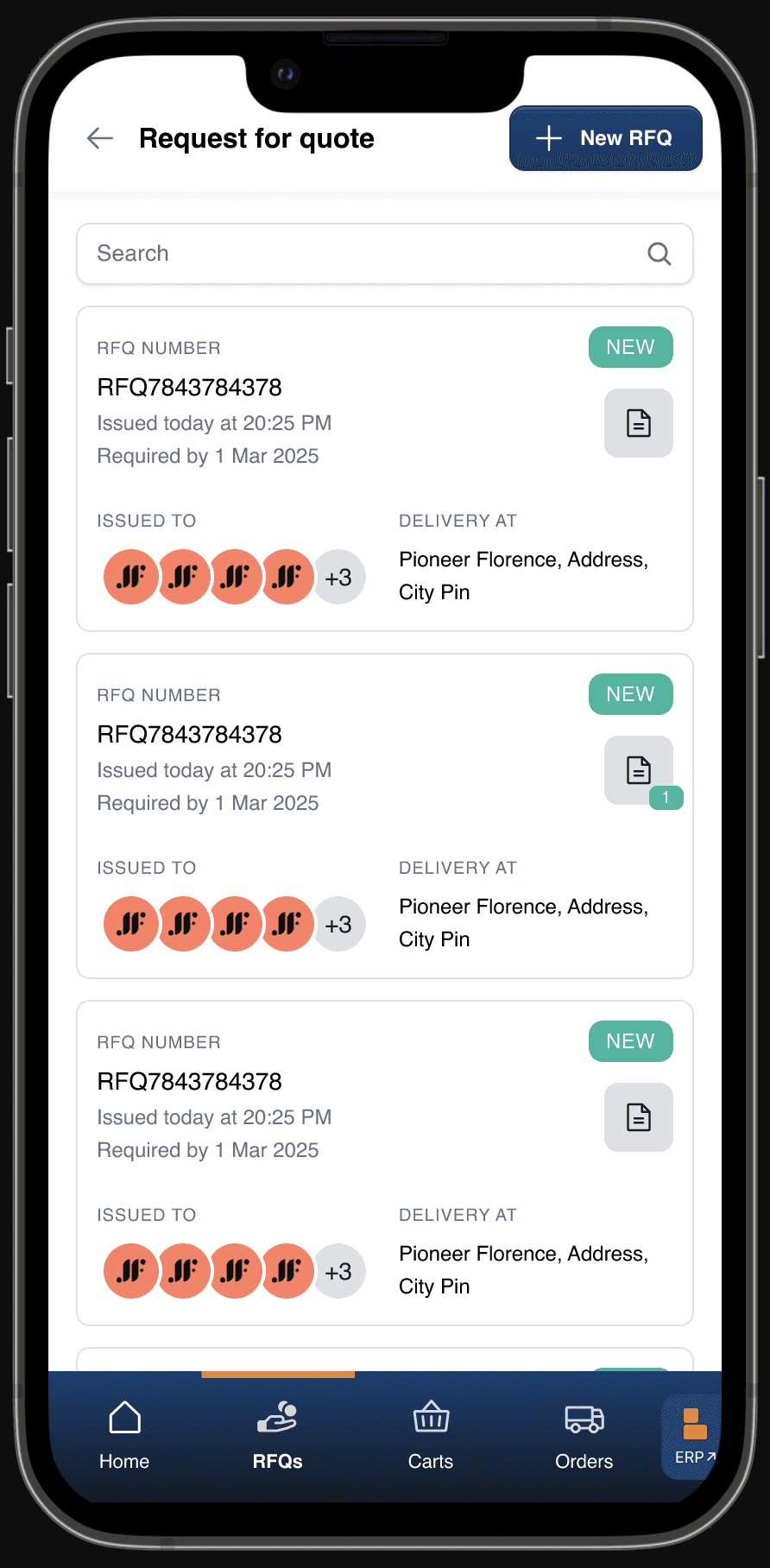
Operational views built for on-ground teams to manage active orders, handovers, and delivery states without system fragmentation.
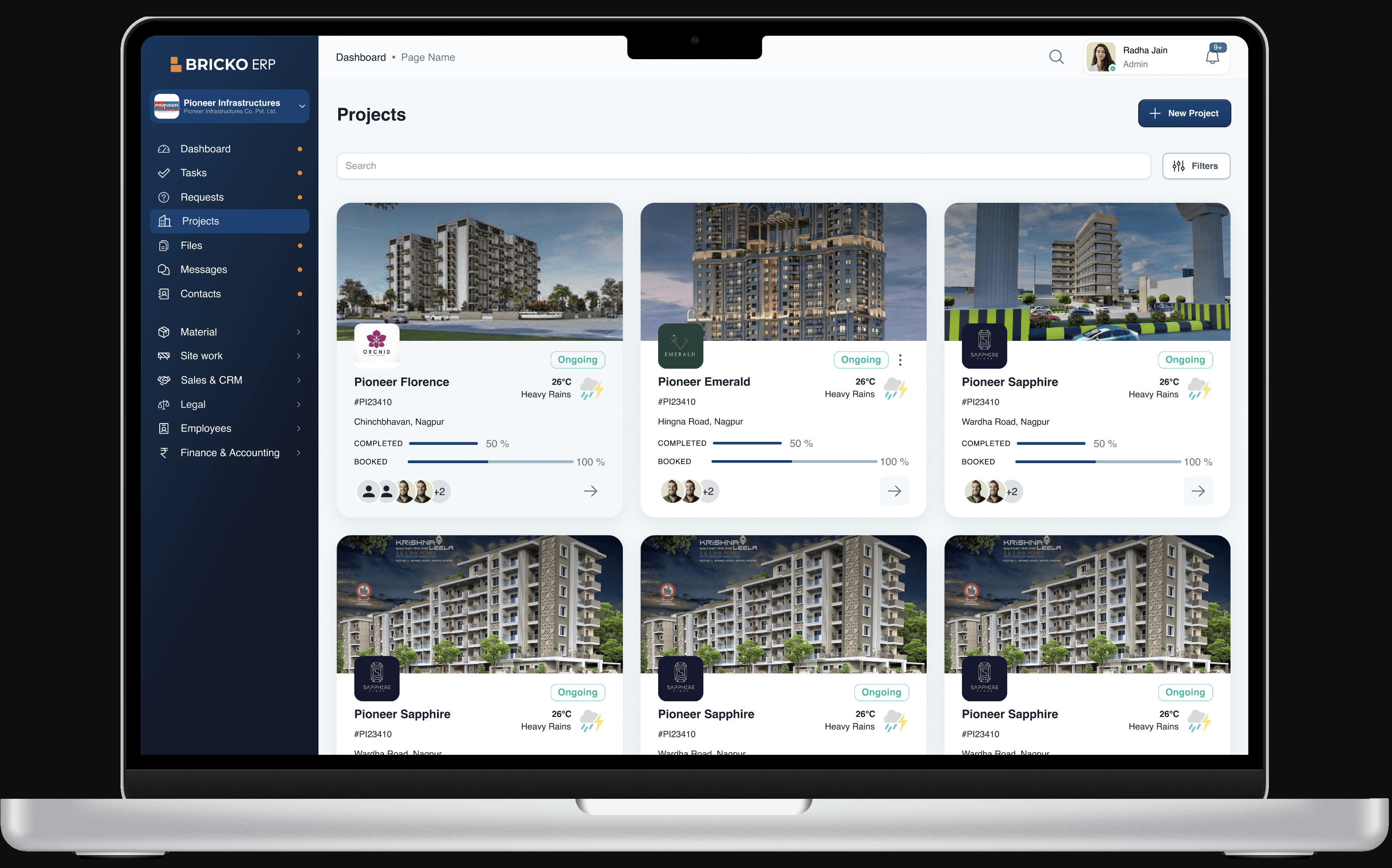
Builder-side inventory and project dashboards designed to manage availability, pricing, and visibility across multiple developments.
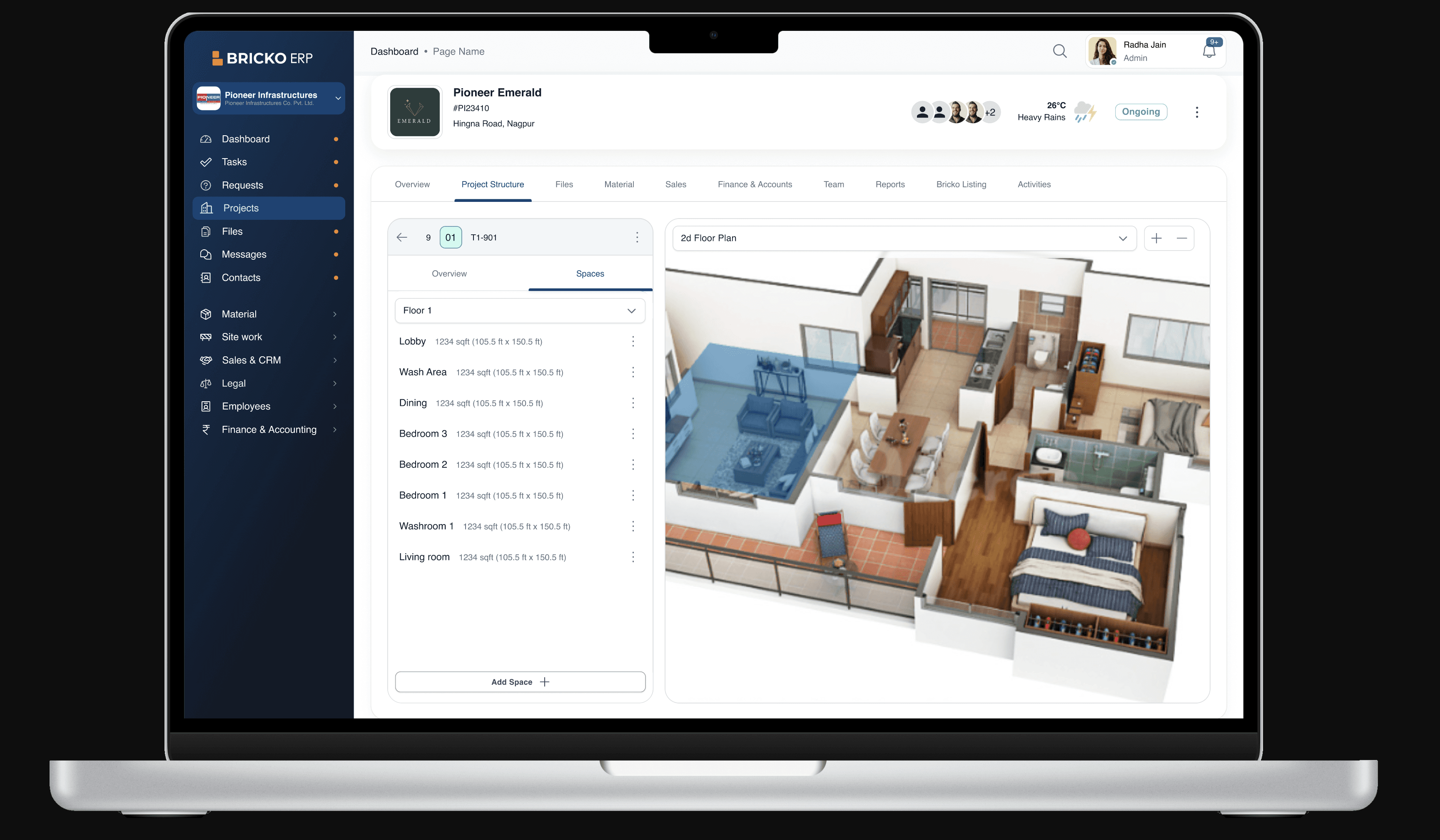
Detailed unit-level views providing spatial context to support informed purchasing and configuration decisions.
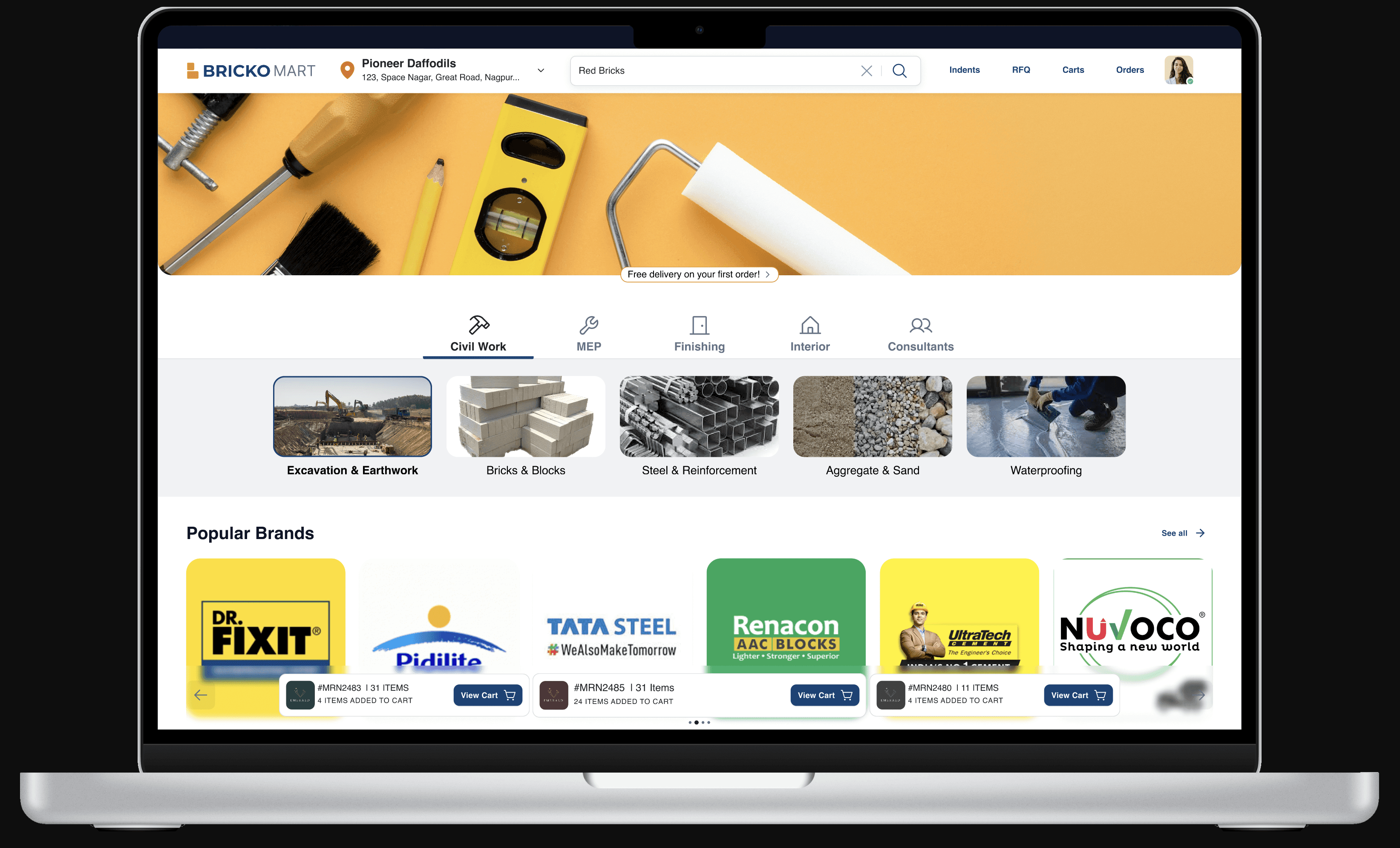
Vendor-managed storefronts integrated into the core system, enabling independent operations without breaking overall coordination.
Decisions That Mattered
One system, not many products
We resisted splitting Bricko into isolated tools. A unified system reduced duplication, data mismatch, and operational blind spots.
Operations before aesthetics
Priority was given to workflows, permissions, and data integrity before visual refinement.Vendor autonomy with system-level control
Vendors could operate independently while remaining fully integrated into the broader commerce and fulfilment system.Scale-ready architecture from day one
The system was designed to support growth in users, transactions, and partners without requiring structural rewrites.
Our Role
We worked across:
Product definition and system design
Experience architecture across roles
Platform structure and operational workflows
Execution coordination across multiple applications
Our role stayed consistent throughout maintaining clarity as complexity increased.
Outcomes
A unified platform supporting multiple stakeholders without fragmentation
Reduced operational friction across sales, vendors, and logistics
Clear ownership and accountability across roles
A system designed to support long-term scale, not short-term delivery
The result was not just a platform, but a working real estate eco-system.
Why This Matters
Bricko demonstrates how complex marketplaces require systems thinking, where decisions about structure, roles, and data matter more than individual features.
It reflects how Montage approaches large-scale platforms:
Clarity First, Systems Second, Execution Last.